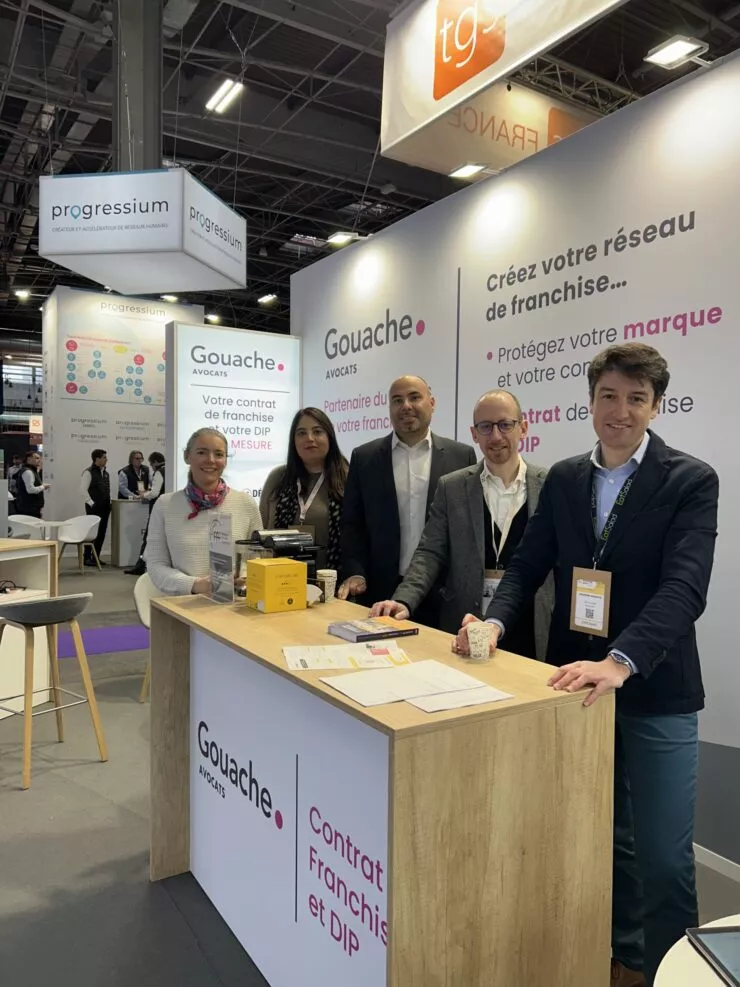



If you plan to
- to sell your distribution network,
- to open a share of your capital to ensure the financing of the development of the network,
- to acquire a competitor or another network.
To do this in the best possible conditions of safety and cost, and to be able to conduct a satisfactory negotiation, you must audit the distribution network, whether yours or the one you covet, and draw from this analysis a summary view of the strengths and weaknesses. This condition is an essential prerequisite for the optimization and success of the proposed operation.
Gouache Avocats
- vendor Due Diligence audits and network presentation info memo, in partnership with the merchant banks or corporate finance consultancy that you appoint us, in order to get the best price from the proposed sale;
- Internal audits
- acquisition audits;
- assistance in the negotiation and drafting of deeds of assignment.
The experience that Gouache Avocats has developed in network contracts, franchise contracts, distribution contracts, and more generally commercial contracts, allows us to effectively detect gaps and areas of legal and financial risks related to the network and its specificities.
Our audits may cover all of Gouache Avocats’ areas of expertise: franchising, distribution law, competition law, economic law, commercial leases, commercial law, intellectual property, advertising, products, consumption and business regulations.
Jean-Baptiste GOUACHE has acted as salesman or buyer advisor on many transactions. He wrote a professional thesis that received the prize for the Best Professional Thesis from the ROUEN BUSINESS SCHOOL (now NEOMA) in 2006, on the problem of the financing of franchise networks by private equity.
Assignment of franchise networks
The sale of networks has specificities, especially when they are organized as franchises.
A branch is a business owner. Each of these businesses, i.e. as much as the brand has points of sale, has a heritage value. Goodwill thus values the assets of the branch’s balance sheet. They can serve as a special pledge to its creditors who can register on these assets pledges of goodwill. They are thus a formidable lever for obtaining credit, funds today having high net asset values linked to the high price of doorsteps. The French law of leases, by creating a right of the lessee to renewal, has indeed contributed to the patrimonialisation of commercial leases.
In addition, each point of sale is operated directly by its owner, or indirectly by means of lease-management agreements: the results of each point of sale therefore contribute fully to the result of the distribution group. In this way, the branch has in principle consistent cash flows.
The franchisor is only a creditor of obligations on franchisees related to its network under a franchise agreement.
The value of his company is therefore largely based, in addition to the value of the brand and know-how, on the quality of his franchising agreement and its characteristics: duration, maturity, renewal conditions, mastery of know-how, level of control of franchisees and their locations, conditions of transfer.
The franchisee being the owner of his business, he operates it at his own risk and alone apprehends the operating result. The franchisor therefore only receives operating fees, calculated on the franchisee’s turnover, which are used to finance the animation and control of the network and on which the franchisor’s margin is in principle limited. The cash flows of a franchisor are thus often more restricted than those of a branch, which is even more true in franchises other than distribution franchises, which benefit from significant margin volumes thanks to the products supplied to the network that constitutes a captive customer.
As a result, the purchaser who enters into the capital of a franchisor first acquires rights in intangible assets: brand and know-how, including franchise agreements.
The attention paid to each of these points is therefore decisive:
- for the franchisor who must prepare for these assets to have all the qualities of consistency and security expected by the investor and on which the value of its business depends;
- for the purchaser who must ensure the value of its assets and secure an investment, then justifying to its own shareholders the acquisition of a stake in terms of return on invested capital.
Franchisors and buyers face three specific issues:
- How to evaluate the franchisor‘s brand and know-how?
- How to assess the quality of the franchise agreement and the level of legal risk related to the formation and execution of the franchise agreement in the network?
- How to assess the quality of the franchising know-how of the company that opens its capital: development, animation, control, communication?

Jérôme Le Hec
Avocat associé
Responsible "Distribution & Concurrence"

Jérôme Guillé
Avocat associé
Responsible "Distribution & Concurrence"

Jean-Baptiste Gouache
Avocat Associé
Responsible "Distribution & Concurrence _ Managing Partner"






The purchaser of a franchisor first acquires rights in intangible assets: brand and know-how, including franchise agreements
Explore our related tools

Distribution Networks, Competition
Automated generation of your contracts
Delegate the preparation of your contracts to... our software!
Our software, programmed with YOUR contract templates and YOUR lawyer or in-house lawyer, only asks you EASY QUESTIONS, so you can generate your contract or your dip in a few clicks.
Delegate the preparation of your contracts to... our software!
Our software, programmed with YOUR contract templates and YOUR lawyer or in-house lawyer, only asks you EASY QUESTIONS, so you can generate your contract or your dip in a few clicks.
Signature électronique
Faites signer vos contrats électroniquement en toute sécurité !
10€
Faites signer vos contrats électroniquement en toute sécurité !
10€